
Ammonia Refrigeration.
Specialist mineral, synthetic-blend and PAO lubricants for industrial R717 systems. Selected for oil separation, low-temperature fluidity and operating viscosity.
Every operating condition
informs the formulation.
Ammonia refrigeration compressor lubricants are mineral, synthetic-blend, or polyalphaolefin (PAO) fluids selected for industrial systems that run on ammonia (R717). Ammonia holds low miscibility with mineral and PAO lubricants. Oil separation, carryover control, low-temperature fluidity, and operating viscosity govern lubricant selection.
Ammonia delivers high thermodynamic efficiency and carries zero ozone-depletion and zero global-warming potential. Large industrial refrigeration systems use ammonia for cold storage, food processing, freezing, beverage production, and process cooling.
NEXT Lubricants produces OEM-approved ammonia compressor lubricants for screw and reciprocating compressors. The range covers mineral and synthetic grades for standard refrigeration, low-temperature service, and continuous-duty installations.
For the full chemistry, diluted-viscosity, and low-temperature comparison, see How to Select an Ammonia Compressor Lubricant: HTMO vs PAO
Lubricants for your application.
Explore the relevant NEXT formulations. Final selection depends on equipment requirements and actual operating conditions.

NEXT 717-68
Hydrocracked Mineral Ammonia Refrigeration Lubricant

NEXT 717-68-XLT
Synthetic Blend Ammonia Refrigeration Lubricant

NEXT 717-68-SYN
Synthetic PAO Ammonia Refrigeration Lubricant

NEXT 717-100
Ammonia Heat Pump Lubricant

NEXT 717-100-XLT
Semi-Synthetic Ammonia Heat Pump Lubricant

NEXT 717-100-SYN
Synthetic PAO Ammonia Heat Pump Lubricant
Need a different chemistry or viscosity grade?
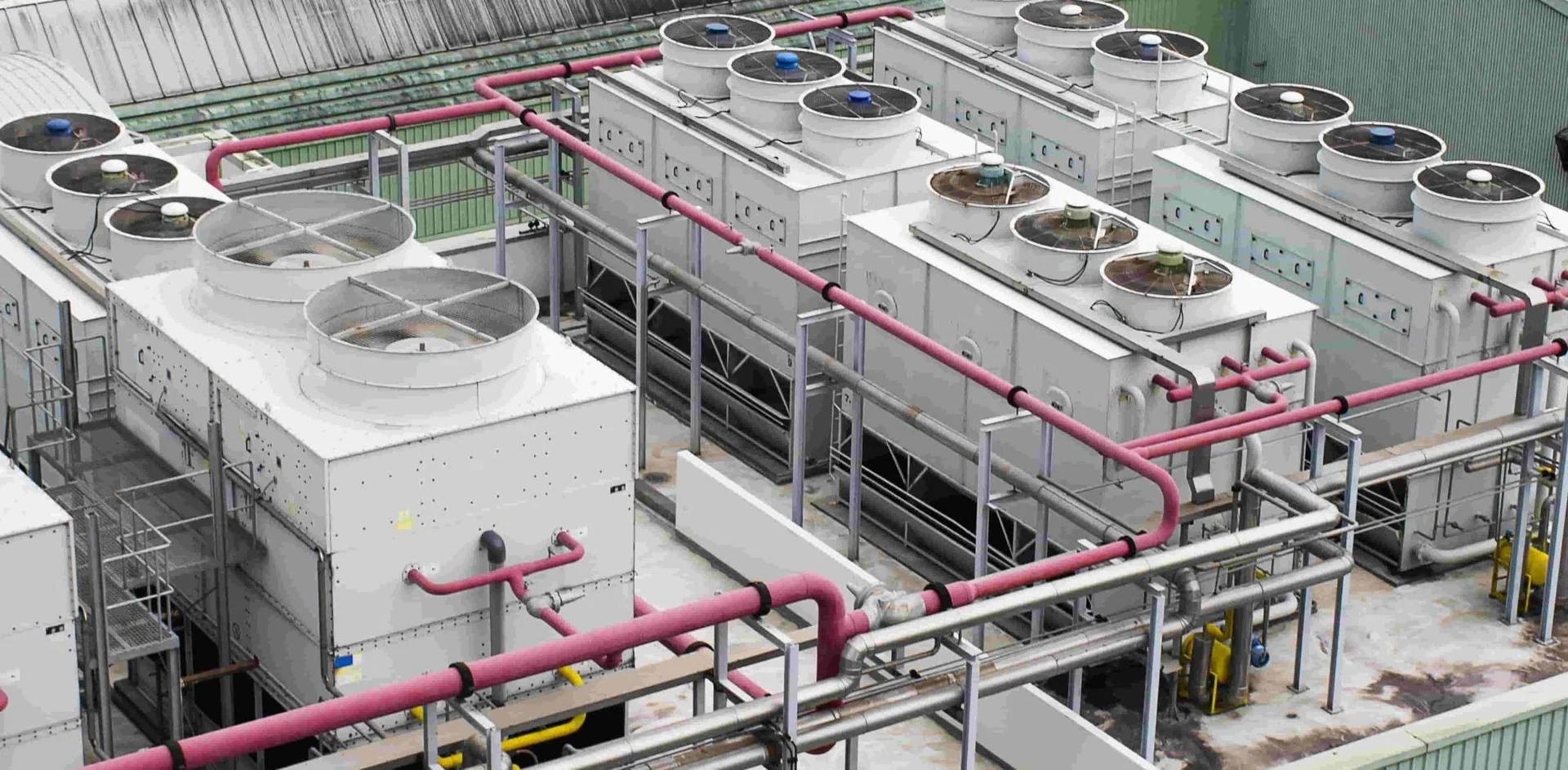
How Ammonia Refrigeration Works and the Compressor's Role
An ammonia refrigeration system removes heat by evaporating liquid R717 at low pressure and then rejecting that heat after the ammonia vapor has been compressed and condensed at a higher pressure. The refrigerant subsequently passes through an expansion stage and returns to the evaporator to repeat the cycle.
The compressor elevates low-pressure ammonia vapor to the pressure needed for condensation and heat rejection. Industrial installations typically employ rotary screw or reciprocating compressors in single-stage, two-stage, booster, or economized configurations, depending on system capacity and the desired temperature level.
The lubricant safeguards bearings, rotors, cylinder walls, and other moving parts, while also aiding in sealing, cooling, and reliable oil-system operation. Its viscosity and condition influence compressor reliability, and its separation and carryover behavior can impact the broader refrigeration system.
01
Cold Storage & Distribution
Cold Storage & Distribution
Large-scale cold stores and temperature-controlled distribution centers use ammonia refrigeration to maintain stable low temperatures across high-capacity facilities operating under continuous load.
02
Food Processing & Freezing
Food Processing & Freezing
Food processing plants, blast freezing tunnels, and freezing spirals rely on ammonia refrigeration for rapid product freezing and precise temperature control throughout continuous production operations.
03
Brewery, Dairy & Beverage Production
Brewery, Dairy & Beverage Production
Ammonia refrigeration supports fermentation temperature control, pasteurization chilling, and cold conditioning in brewery, dairy, and beverage production environments.
04
Industrial & Process Cooling
Industrial & Process Cooling
Chemical, petrochemical, and industrial manufacturing facilities use ammonia refrigeration where large cooling capacities, low evaporating temperatures, or precise process temperature control are required.
05
Ice Production and Ice Rinks
Ice Production and Ice Rinks
Industrial ice plants and ice-rink refrigeration systems use ammonia for efficient centralized cooling and dependable operation across large evaporator loads.
The details
that matter.
Understand the advantages, operating priorities and practical steps for your application.
01
At a glance
At a glance
- Choose for the viscosity delivered at the lubrication point after ammonia dilution, not the fresh-oil ISO grade alone.
- Flooded systems rely on oil separation and draining. Direct-expansion systems need a miscible lubricant that returns with the refrigerant.
- Check measured low-temperature viscosity as well as pour point: oil reaching low-side vessels must remain drainable.
- Exclude POE contamination from R717 circuits. POE reacts with ammonia and can form viscous material and sludge.
02
What to consider
What to consider
Low miscibility does not prevent ammonia from dissolving in the lubricant. At 70 °C and 30 bar, measured dilution of approximately 5% by mass can reduce an ISO VG 68 mineral oil to roughly 8 cSt. Assess the diluted oil at the lubrication point against the working minimum of 10 cSt and the compressor manufacturer's requirements.
Oil carried into low-side vessels can impair heat transfer. Select for effective separation and measured cold-temperature flow, including shutdown and start-up conditions. Scanning Brookfield viscosity under ASTM D5133 gives information that pour point alone cannot provide.
For very low temperatures, elevated oil temperatures or demanding service intervals, review the benefits of synthetic-blend or PAO formulations alongside thermal stability and deposit control.
03
Operating conditions
Operating conditions
- Compressor: screw or reciprocating design, OEM requirements and minimum viscosity at the specified lubrication temperature.
- Refrigeration cycle: evaporating temperature, condensing pressure and the lowest temperature the oil encounters.
- Oil circuit: oil-supply, injection and separator temperatures, which are needed to assess delivered viscosity.
- Duty: continuous running, planned drain interval and the time between maintenance visits.
For direct-expansion systems, confirm the required miscible grade; this is typically specified one ISO viscosity grade higher.
04
Advantages
Advantages
A lubricant matched to the R717 system can help reduce carryover, oil consumption and lubrication-related downtime. Protective film strength supports bearings, rotors, cylinders and seals while effective lubrication and sealing avoid unnecessary viscous resistance.
Resistance to oxidation, dilution and contamination also supports more predictable oil changes and maintenance planning.
05
Technical support
Technical support
NEXT can review your compressor, R717 operating conditions and current lubricant to recommend a suitable formulation or investigate carryover, poor draining, deposits and reduced oil life.
Support can include cross-references, dilution and PVT data, material compatibility and conversion guidance. Before a changeover, review mixing behaviour, flushing requirements and the risk of incompatible lubricant contamination.
Clarity for your
next decision.
01What type of oil is used in ammonia refrigeration compressors?+
Industrial ammonia systems run on hydrotreated mineral oil, polyalphaolefin (PAO), or blends of the two. Mineral grades cover conventional flooded refrigeration at evaporating temperatures above roughly −35 °C. PAO grades cover low evaporating temperatures, high discharge temperatures and extended drain intervals. Blends sit between the two where full PAO is not justified.
Direct-expansion systems are the exception and require an ammonia-miscible polyalkylene glycol (PAG) instead, because they depend on the lubricant returning with the refrigerant.
The deciding inputs are the compressor type and OEM viscosity requirement, the evaporating temperature, the measured discharge temperature, and the lowest temperature the lubricant reaches anywhere in the system — which is usually not inside the compressor.
02Is ammonia really insoluble in refrigeration oil?+
Incorrect, and this is one of the most persistent errors in the field.
Measured pressure-volume-temperature work puts ammonia solubility in an ISO VG 68 Group II mineral oil at approximately 5.2 % by mass at 70 °C and 30 bar, with viscosity falling to about 8.09 cSt. A PAO at the same conditions carries about 4.1 % and delivers 9.66 cSt.
Both sit at or below the 10 cSt working minimum. The practical consequence: an ISO VG 68 lubricant in an ammonia compressor is not delivering ISO VG 68 performance, and the higher the condensing pressure, the further it falls. This is why ammonia heat pumps commonly move to ISO VG 100.
03Why is pour point a poor way to compare ammonia lubricants?+
Because pour point records the temperature at which a sample stops flowing in a test jar. It says nothing about how viscous the fluid became on the way down, and the test has known repeatability limits.
Two ISO VG 68 ammonia lubricants can carry identical published pour points of −42 °C and differ by more than 25 % in measured viscosity at −35 °C. Across a group of commonly used products, the ranking by pour point does not match the ranking by measured low-temperature viscosity.
The comparable measurement is scanning Brookfield viscosity under ASTM D5133, which reports actual centipoise as the sample cools. It matters because a lubricant that thickens in a low-temperature vessel drains slowly or not at all, so it accumulates exactly where it does the most damage to heat transfer.
NEXT publishes measured Brookfield data rather than pour point alone when comparing ammonia grades.
04What actually happens when lubricant accumulates in an ammonia evaporator?+
It insulates the heat transfer surface, and the cost appears as compressor run hours rather than as an oil problem.
Because ammonia has very low miscibility with mineral and PAO lubricants — and because the lubricant is denser than liquid ammonia — anything escaping the separator settles as a separate layer at the bottom of vessels and evaporators rather than circulating back.
Published work on R717 in an 8 mm tube shows tube-side heat transfer coefficients falling at oil concentrations between 0.1 % and 1 %, with the effect strongest in annular flow. Earlier work recorded a 30 % reduction in heat transfer coefficient from an oil film. It does not take much accumulation before a plant is either losing capacity or running colder suction temperatures to compensate.
The controls are separator performance, reliable draining of oil pots and low points, and a lubricant fluid enough at low temperature to actually drain when the valve is opened.
05Can polyol ester (POE) be used with ammonia?+
No. This is one of the few absolutes in compressor lubrication.
Ammonia attacks the ester bond and depolymerizes POE, producing solids, viscous residues and sludge that foul heat transfer surfaces and can block orifices and expansion devices.
It matters beyond product selection in one specific case: in an ammonia/CO₂ cascade the CO₂ side commonly runs POE, and the CO₂ circuit normally sits at the higher pressure — so a cascade heat exchanger leak carries ester contamination toward the ammonia circuit rather than away from it. That belongs on the design review checklist, not only on the lubricant order.
06What changes when converting from a naphthenic oil?+
The seals, and it catches people out because it has nothing to do with chemical compatibility.
Naphthenic oils swell elastomers. A plant that has run one for years has a seal population that has been swollen for that entire time. Moving directly to a highly refined hydrotreated mineral or PAO can shrink those seals and produce leaks on a system that was tight the week before.
The answer is a seal-conditioned grade for the transition rather than a different chemistry. NEXT 717-68-SC carries seal conditioners for exactly this case, and it is the grade NEXT routes every naphthenic replacement to.
Expect a second effect at the same time: modern hydrotreated base stocks will lift deposits the naphthenic oil left behind. That is desirable over the life of the system and a filter problem in the first weeks, so monitor oil and suction filters closely after the change.
07Can another brand's ammonia compressor oil be replaced without flushing?+
In most cases within the same chemistry family, yes — and NEXT holds documentation rather than an opinion on it.
NEXT tests its ammonia grades against widely used competitor products at 80/20, 50/50 and 20/80 mixture ratios, covering chemical compatibility, physical properties and foaming tendency. Products that pass receive a formal substitution statement, which confirms that the NEXT product can be used for top-up without draining the system, that performance will be equivalent or better, and that no equipment or operating condition changes are required.
Statements currently exist for ten commonly used ammonia lubricants across hydrotreated mineral, naphthenic and PAO chemistries.
Two limits apply. Naphthenic products route to the seal-conditioned grade for the reason above. And an ammonia-miscible PAG for direct-expansion duty is not compatible with hydrocarbon lubricants in either direction — that conversion requires a full drain, flush and filter change.
Ask for the statement covering the product currently in the machine before planning the changeover.
Know your current lubricant?
Find your NEXT reference.
Compare published references by manufacturer, product and viscosity. Our technical team can confirm application suitability.